


Pinot Noir.
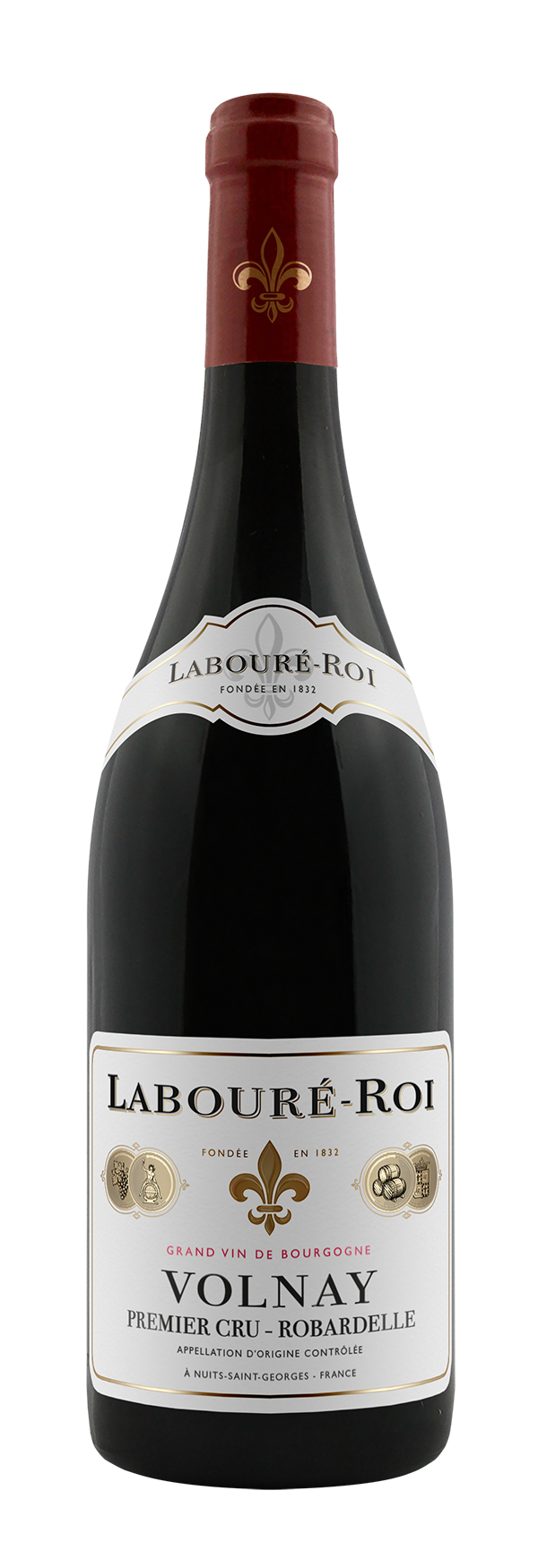
Colour: dark red robe.
Bouquet: flavours of red and black ripe fruits, especially red cherries with toasted hints of coffee and spices.
Palate: the full attack shows a velvet structure, rich, well balanced, spicy, fruity (blackcurrant, blueberries, black cherries), generous, candied fruits and spices, silky tannin, complex, very nice and refined structure.
Drink with a warm Mont d’Or cheese and Morteau sausage, feathered game, steak tartare, guinea fowl with a turnip bake, pan-fried Brussels sprouts with bacon or a tender piece of Tome cheese from Savoie.
Serve ideally at room temperature, around 15-16°C. (59-61°F.).
This wine can be drunk now, but can also be kept in the cellar for 6 to 8 years.
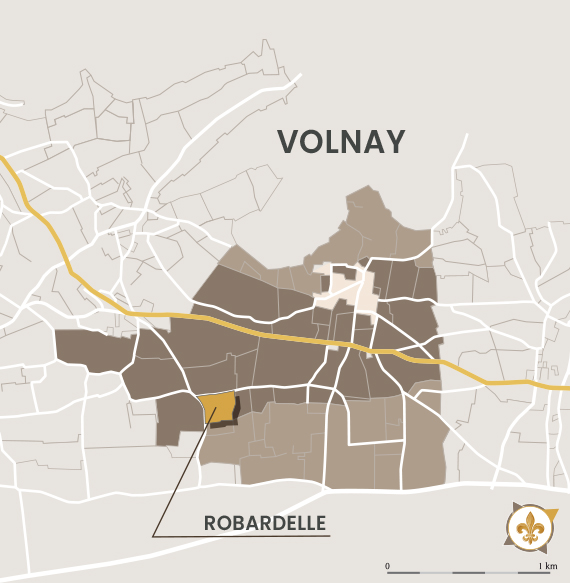
The village of Volnay is located in the Côte de Beaune, in Burgundy, South of the town of Beaune and neighbouring the village of Pommard. This appellation is part of the rare ones that only produces red wines. These vineyards have been valued and exploited for centuries. Long before the Revolution the harvests of Volnay went to the Dukes of Bourgogne. The typicity of this red Pinot Noir wine was fixed as early as the 18th century. It gained its controlled appellation status in 1937. Meaning of the climate Robardelle: this area is not far from the ancient Roman road and quarries. The configuration of the places allowed the brigands of great way (robardel) to run and hide easily. Soils made of marl, chalk and fallen rocks. Exposure : East, South-East. Altitude : 230 m à 340 m.
Harvested by hand, the harvest is sorted at the vineyard and upon arrival at the cellars. The grapes are destemmed, crushed and then placed in thermo-regulated vats. The vinification begins with a cold maceration (8°-10°C) for a few days then the alcoholic fermentation takes over. Selected Burgundy yeasts and daily punching down and pumping over are practiced to promote the extraction of colour material and tannins. The unpacking makes it possible to obtain a drop juice and a press juice that we assemble. The new wine is then placed under the wood for 12 to 15 months. Maturing in French oak barrels with a proportion of 30% new ones.
The year 2024 in Burgundy was marked by extreme weather conditions, with excessive rainfall and a significant lack of sunshine. These factors led to heavy disease pressure, particularly downy mildew, complicating the work of the winegrowers. Frost and hail also caused significant damage, particularly in regions such as Chablis and Auxerrois.
Yields were severely affected, with drops of up to 70% in some areas. The Côte Chalonnaise held up better, with more limited losses. Overall, volumes are well below the usual average, a reminder of the difficult harvests in 2021.
The late harvest necessitated rigorous sorting to preserve quality. Despite the challenges, the grapes harvested reached good ripeness thanks to a sunny spell in September. The reds stand out for their richness and concentration, comparable to great vintages such as 2010. The elegant whites are reminiscent of 2022.
Initial tastings reveal promising wines, with concentrated aromas and a fine structure. Although limited in quantity, this vintage promises to be a qualitative success.
 PDF file