


Chardonnay.
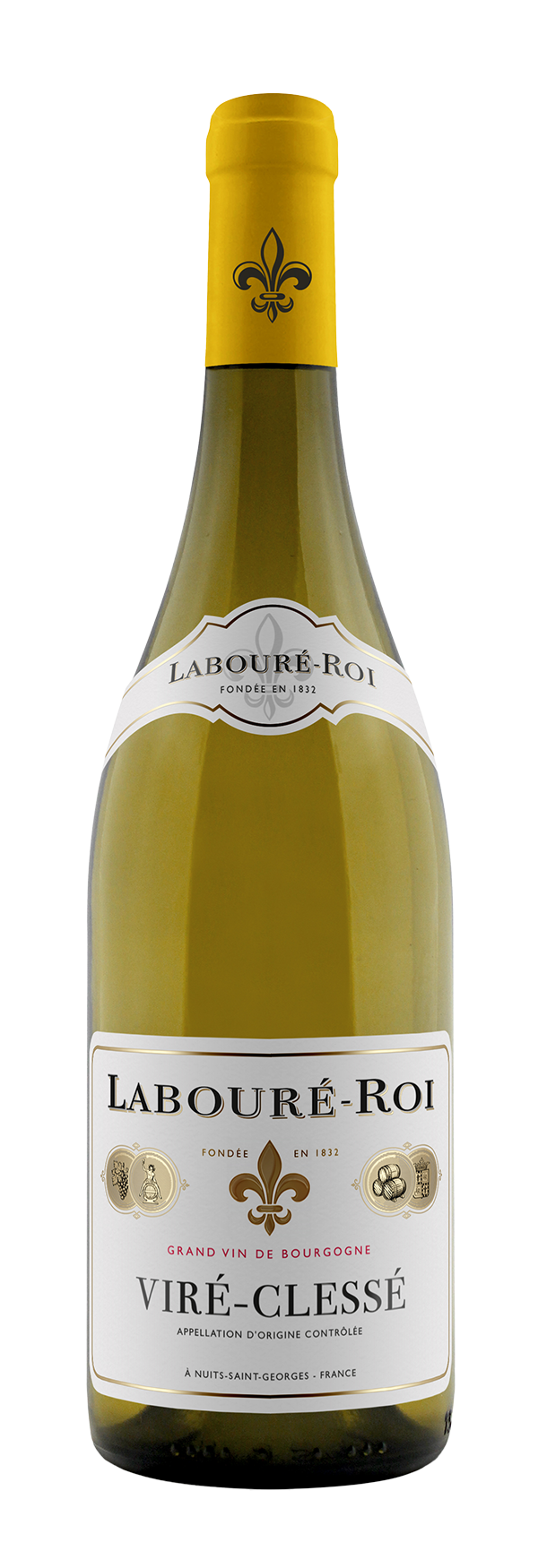
Colour: yellow gold with light green highlights.
Nose: sparkling, reminiscent of yellow fruit and quince paste on a background of fresh almonds.
Palate: refreshing, with notes of grapefruit, and generous with notes of fruit paste. The finish is mineral, very representative of the terroir.
Simply enjoy as an aperitif. It can also be served with terrines and dishes in sauce, such as veal marengo or steamed fish. For cheese, pair with a piece of Comté or goat's cheese.
Ideally serve between 11°C and 13°C (52-55°F).
This wine can be enjoyed now or cellared for the next three to five years.
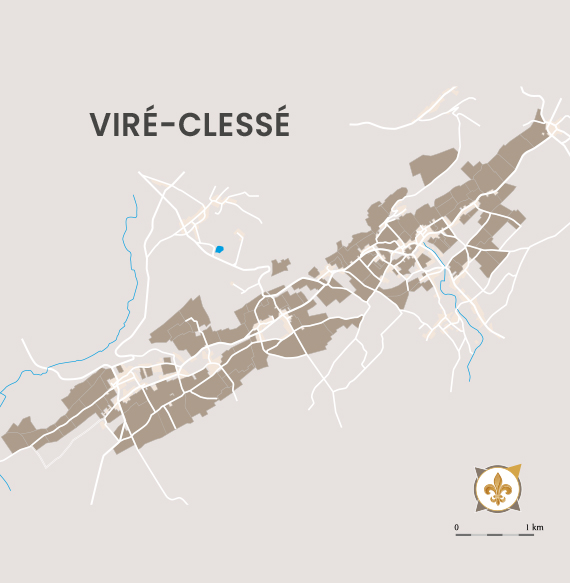
Viré-Clessé, first Village appellation made from the outstanding terroirs of the AOC Mâcon-Villages, covers the communes of Viré and Clessé in southern Burgundy, between Tournus and Mâcon.
The cru is made up of two north-south slopes, bounded by the Bourbonne and Mouge valleys. They are made up of Bajocian limestone with entrocitic deposits and Oxfordian (Jurassic) marl-limestone strata. Other soils at the bottom of the slopes are made up of clay with ‘chailles’ (sandstone pebbles), facing east and well drained.
The vineyards, on clay-limestone soils, face east and south-east, on steep slopes at an altitude of 200-400 metres.
The grapes are gently pressed to extract the highest quality juice possible. The resulting must is placed in a temperature-controlled vat for settling (12 to 24 hours). This settling operation is crucial in our quest for aromatic purity. The must is then racked and placed in temperature-controlled stainless steel vats (16-18°C) for alcoholic fermentation.
Ageing in stainless steel vats on the lees (80%) and in oak barrels (20%) for 8 to 10 months.
The year 2024 in Burgundy was marked by extreme weather conditions, including excessive rainfall and a significant lack of sunshine. These factors led to high disease pressure, particularly downy mildew, complicating the work of winegrowers. Episodes of frost and hail also caused substantial damage, especially in regions such as Chablis and the Auxerrois.
Yields were heavily impacted, with losses reaching up to 70% in certain areas. The Côte Chalonnaise proved more resilient, recording more limited losses. Overall, volumes are well below the usual average, reminiscent of the difficult 2021 harvest.
The late harvest required rigorous sorting to preserve quality. Despite the challenges, the harvested grapes reached excellent ripeness thanks to a sunny spell in September. The reds stand out for their richness and concentration, comparable to great vintages like 2010. The whites, characterized by their elegance, are reminiscent of the 2022 vintage.
Initial tastings reveal promising wines with concentrated aromas and fine structure. This vintage, though quantitatively limited, is shaping up to be a qualitative success.
 PDF file