


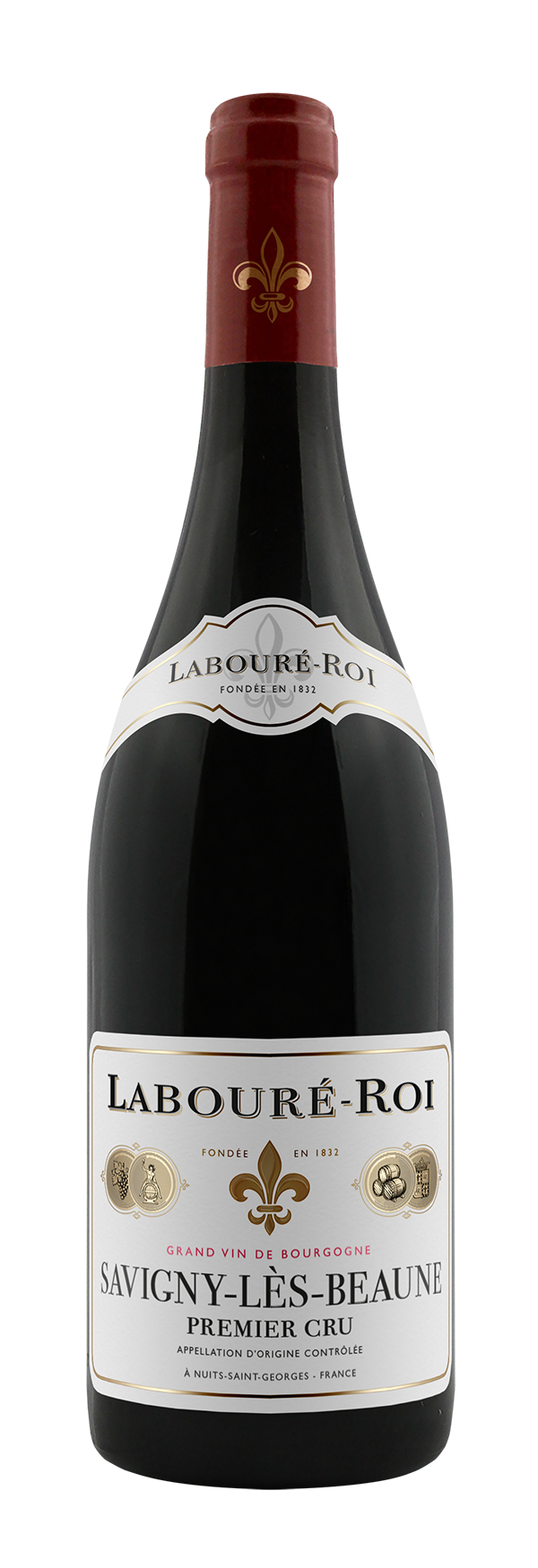
Pinot Noir.
Colour: Ruby with dark red highlights.
Nose: Cherry and strawberry, opening to more complex notes of spice, vanilla and empyreumatic aromas.
Palate: Powerful and harmonious on the palate, with predominantly black and red fruit flavours.
This Premier Cru goes perfectly with dishes in sauce, grilled and roasted red meats. It also goes well with poultry, pork and veal. It also goes well with washed-rind cheeses such as Époisses, Langres and Soumaintrain.
Ideally served at a temperature of 15-16°C. (59-61°F.).
This Premier Cru requires a few years' rest before opening. It can be kept on average for 10 years.
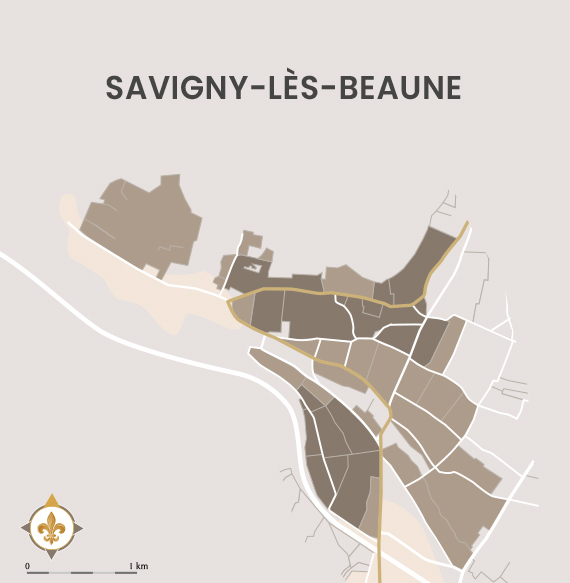
Savigny-lès-Beaune, a Village appellation in the Côte de Beaune region of Côte-d'Or, has 22 Premiers Crus. Its ancient vineyards stretch between Montagne de Corton and Beaune, in a hilly landscape crossed by the Rhoin River. Once owned by the ducal estate, abbeys and the Knights of Malta, it reflects a rich history, illustrated by the 14th-century castle that dominates the village.
The village of Savigny benefits from a unique situation that gives rise to two different types of wine: the neighbouring slope of Pernand-Vergelesses produces mineral, fruity and elegant wines, while the other, located near Mont Battois, produces richer nectars with more structure.
The grapes were harvested by hand and sorted on arrival at the winery. 50% of the grapes were destemmed. Vinification then took place in open wooden vats, with a long maceration period (around 3 weeks) to extract as much as possible from the grapes. The cap was punched down twice a day during fermentation at a temperature of 30°C/86°F. Racking every 4 days. 16 months ageing in oak barrels (30% new oak).
From November 2021 to January 2022, there was abundant rain, followed by cool months in February and March, which delayed budding and prevented frost. May was particularly warm, favouring good flowering, but June was marked by hot mornings and violent thunderstorms in the afternoon. In July, intense heat led to water stress, slowing down the ripening of the vines, depending on the plot.
Work in the vines influenced the results, with some plots producing an excellent vintage, while others suffered from dehydration. Most of the harvest began at the beginning of September, with beneficial rain falling at the end of the day or at night, allowing the grapes to offer a good balance between sugar content and acidity.
Harvesting finished in mid-September, with production close to normal despite variable volumes. The 2022 wines have notes of ripe fruit, while retaining their freshness. They are generous and well-balanced.
 PDF file