


Chardonnay.
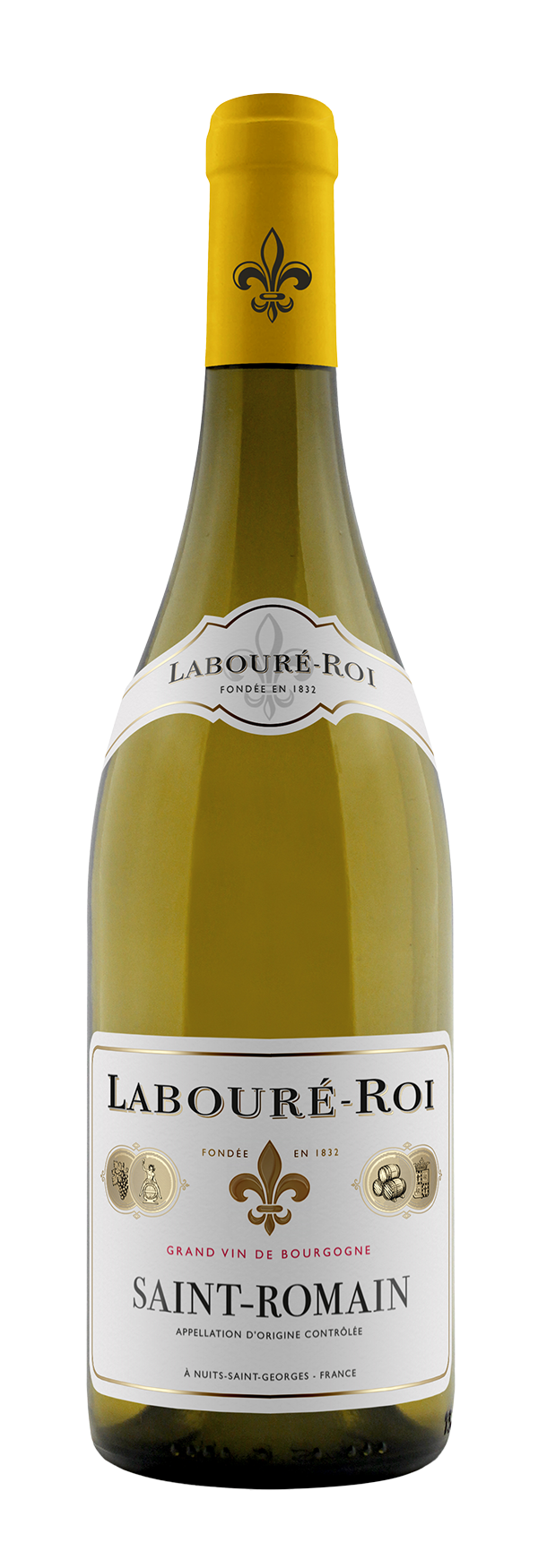
Colour: Bright and light straw colour.
Bouquet: The nose is very expressive, on citrus, grapefruit and minerality. Beautiful toasted, elegant and powerful notes complete this bouquet.
Palate: The palate is full to the attack, citrus and mineral flavours dominate. It is a racy, elegant, rather rich wine, also offering a lot of freshness. And what a long mouth!
Enjoy with lobster, shrimp, steam-cooked fish in light sauce, raw vegetables as first course, oysters cooked with leeks and truffles, tartiflette, risotto with peas, or white meats.
Like all white Burgundies of this quality, the Saint-Romain blanc should be served at a cellar temperature of about 14°C. (57°F.)
Pleasant when fresh and young, it can also be kept in the cellar 5 to 8 years after the vintage.
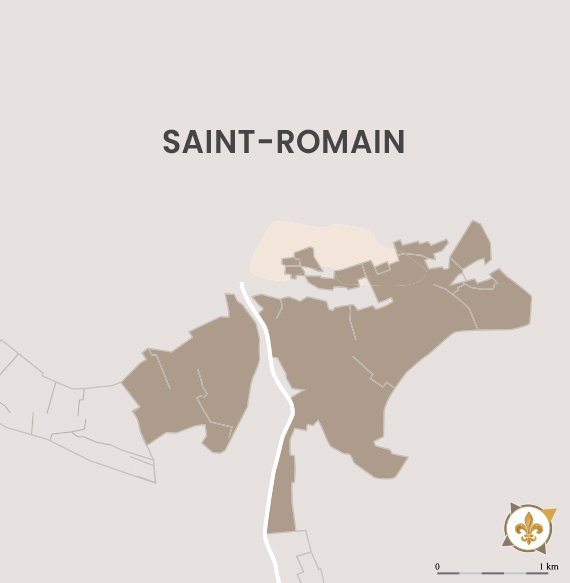
Sheltered by its spectacular cliffs, this appellation lies in the commune of the wine-growing area of Auxey-Duresses. Saint-Romain used to be part of the Hautes-Côtes de Beaune but finally obtained the village appellation in 1947, taking into account the fabulous terroir that produce high quality wines. White Saint-Romain wines are very seductive, fresh and persistent. This appellation has one of the greatest value for money in Burgundy.
The soil type is made of a mixture of limestone and marl including patches of Jurassic clay. South/South-East and North/North east facing at an altitude from 280 to 400 m.
100% hand harvested, the Chardonnay grapes are sorted on a table at their arrival at the winery. After a delicate and slow pressing, the juices are cooled and then placed into Burgundian 228L oak barrels to finish the vinification process.
The wine is then aged on lees during 14 months and then blended and matured in stainless steel tank for 2 to 3 months.
The year 2024 in Burgundy was marked by extreme weather conditions, with excessive rainfall and a significant lack of sunshine. These factors led to heavy disease pressure, particularly downy mildew, complicating the work of the winegrowers. Frost and hail also caused significant damage, particularly in regions such as Chablis and Auxerrois.
Yields were severely affected, with drops of up to 70% in some areas. The Côte Chalonnaise held up better, with more limited losses. Overall, volumes are well below the usual average, a reminder of the difficult harvests in 2021.
The late harvest necessitated rigorous sorting to preserve quality. Despite the challenges, the grapes harvested reached good ripeness thanks to a sunny spell in September. The reds stand out for their richness and concentration, comparable to great vintages such as 2010. The elegant whites are reminiscent of 2022.
Initial tastings reveal promising wines, with concentrated aromas and a fine structure. Although limited in quantity, this vintage promises to be a qualitative success.
 PDF file