


Pinot Noir.
Appearance: Intense ruby with brilliant highlights.
Nose: Delicate aromas of ripe black fruits and fine spices, revealing a complex bouquet.
Palate: Ample and structured with supple, well-integrated tannins. A very fine wine with great length and a pleasant finish.
It will pair beautifully with a rosé veal chop served with a fricassee of wild mushrooms, red meats, goose leg, and all types of furred game. Wild boar stew is a "must." Prefer strong, well-aged cheeses.
Ideally served at a temperature of 16 to 17 °C.
This wine can be enjoyed for its youthful aromas, but it will age beautifully in the cellar for 8 to 10 years.
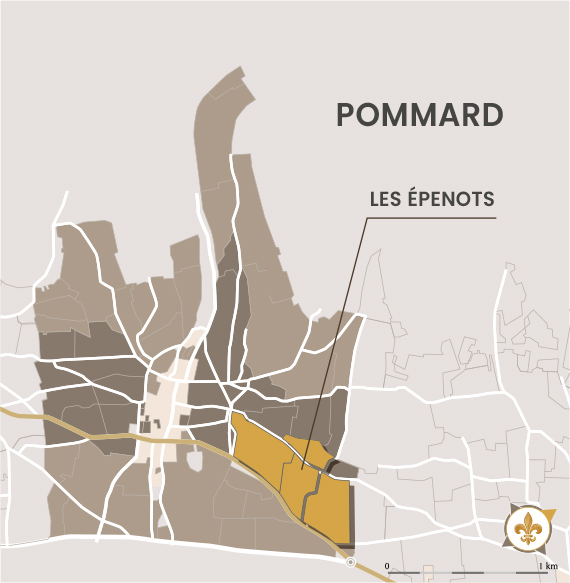
World-renowned, Pommard is the first village south of Beaune in Burgundy. The Pommard appellation produces exclusively red wines from Pinot Noir. The vineyard covers approximately 300 hectares, including 125 hectares of Premier Cru.
Facing southeast, the vineyard is cultivated on ancient alluvial soils, followed by clay-limestone soils and Oxfordian marl. The gently sloping hillsides are situated at an altitude between 250 and 330 m.
Hand-harvested, the grapes are sorted first in the vineyard and then at the winery upon arrival. They are then destemmed and crushed before being placed into temperature-controlled vats. The vatting period lasts 22 to 25 days. Vinification begins with a cold maceration (8-10 °C) for 5 to 6 days, followed by fermentation with the addition of yeasts, along with daily pumping over and punching down. Aging continues in 228-liter barrels, with approximately 35% new oak, for 12 to 15 months.
The 2024 vintage in Burgundy was marked by extreme weather conditions, including excessive rainfall and a significant lack of sunshine. These factors led to high disease pressure, particularly mildew, complicating the work in the vineyards. Episodes of frost and hail also caused substantial damage, especially in regions such as Chablis and the Auxerrois.
Yields were heavily impacted, with decreases of up to 70% in certain areas. The Côte Chalonnaise proved more resilient, recording more limited losses. Overall, volumes are well below the usual average, reminiscent of the difficult 2021 harvest.
The late harvest required rigorous sorting to preserve quality. Despite these challenges, the grapes reached excellent maturity thanks to a sunny period in September. The reds are distinguished by their richness and concentration, comparable to great vintages like 2010. The whites, elegant in style, are reminiscent of the 2022s.
Initial tastings reveal promising wines with concentrated aromas and beautiful structure. This vintage, though limited in quantity, shows every sign of being a qualitative success.
 PDF file