


Pinot Noir.
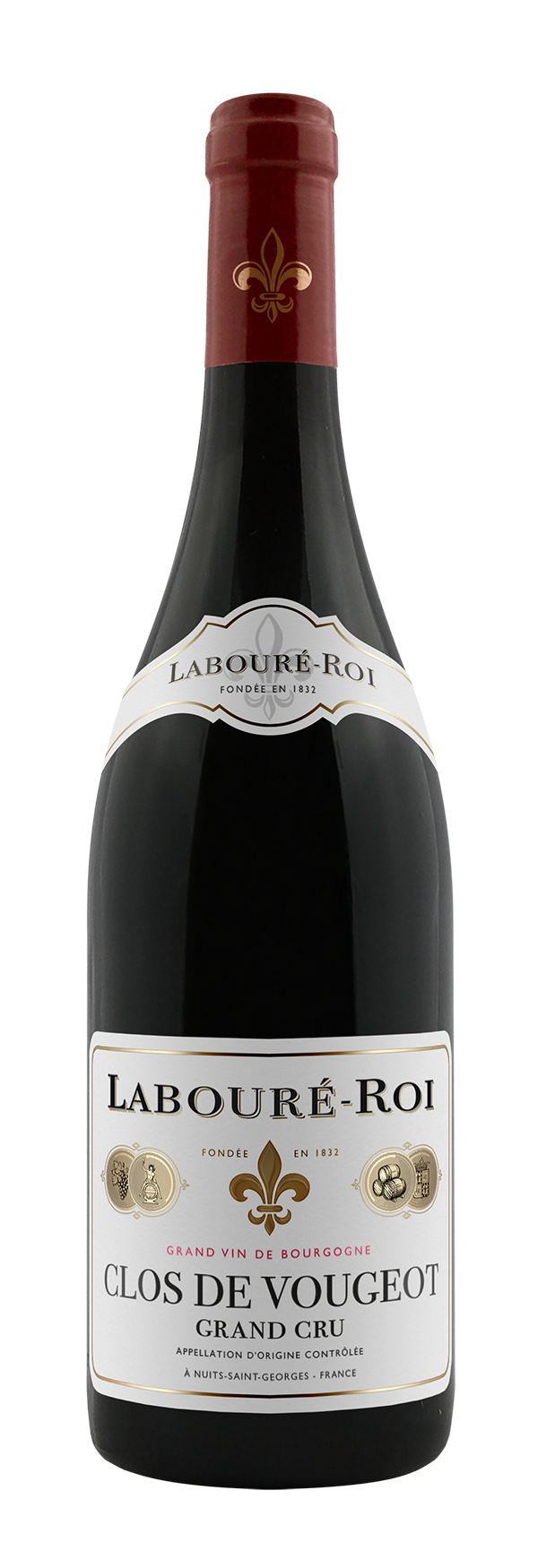
Colour: A deep cherry red.
Nose: An intensely aromatic bouquet combining concentrated perfumes of red and black fruits (cherries, blackberries and blackcurrants..).
Palate: Expressive, round, and muscular, with intense aromas. It balances mellow tannins and subtle acidity, offering a solid structure and length, making it ideal for aging.
It will be the ideal companion for fine meats marinated or cooked in sauce, large and small game, goose or duck confit, well-made cheeses and even, for dessert, a dark chocolate cake.
To be enjoyed, by decanting it one hour before serving, at a temperature of 16 to 18°C.
In good conditions, this great wine will keep for 7 to 15 years.
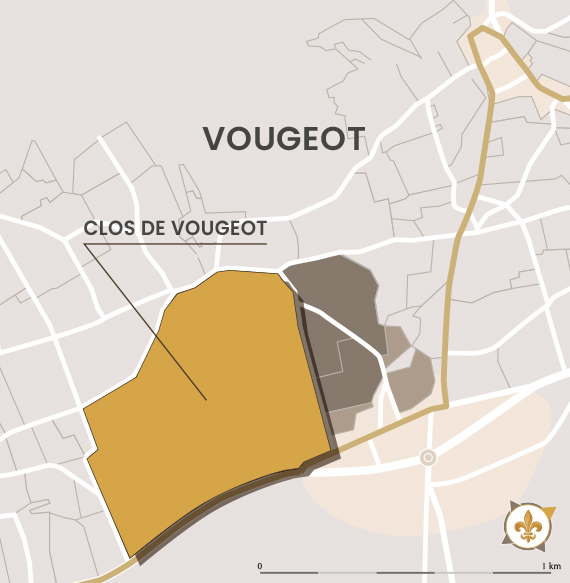
Clos de Vougeot remains — and will always be — more than just a wine. The appellation is a flagship, a standard-bearer, the emblem of the entire Côte d’Or. With over 50 hectares of Grand Cru classified vines, this unique clos takes its name from the monks of Cîteaux Abbey, who founded it. It stretches from the plain, near the current national road, up to the foot of the hill forming a gentle slope. With little variation (240–270 m), altitude matters less than soil in shaping the wine's character.
At the top of the vineyard, the soil is a mix of clay and brown gravel; the mid-slope features a highly stony composition, while the lower section, with its deeper, more clay-rich soils, lends the wines greater structure and firmness.
Hand-picked, the grapes are sorted in the vineyard and then again in the winery on a table. The grapes are then 100% de-stemmed but not crushed, so they are placed whole in vats by gravity. Maceration lasts around three weeks, with regular punching down of the cap. No oenological products (such as yeasts, enzymes or tannins) are added, so as not to alter this precious terroir. The wine is aged for 15 months in barrels without racking.
The year 2024 in Burgundy was marked by extreme weather conditions, with excessive rainfall and a significant lack of sunshine. These factors led to heavy disease pressure, particularly downy mildew, complicating the work of the winegrowers. Frost and hail also caused significant damage, particularly in regions such as Chablis and Auxerrois.
Yields were severely affected, with drops of up to 70% in some areas. The Côte Chalonnaise held up better, with more limited losses. Overall, volumes are well below the usual average, a reminder of the difficult harvests in 2021.
The late harvest necessitated rigorous sorting to preserve quality. Despite the challenges, the grapes harvested reached good ripeness thanks to a sunny spell in September. The reds stand out for their richness and concentration, comparable to great vintages such as 2010. The elegant whites are reminiscent of 2022.
Initial tastings reveal promising wines, with concentrated aromas and a fine structure. Although limited in quantity, this vintage promises to be a qualitative success.
 PDF file