


Chardonnay.
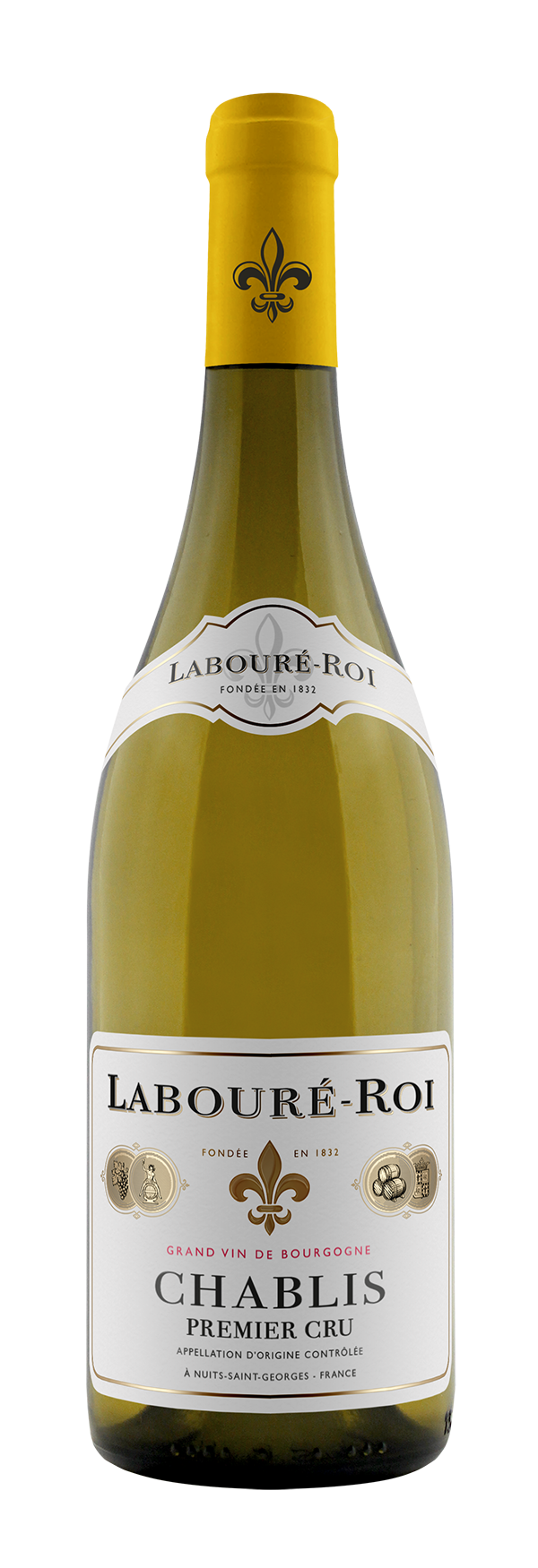
Colour: nice pale golden green colour, limpid and bright.
Nose: it reveals the aromatic wealth of Chablis’ terroir with mineral notes of flint, enhanced by hints of acacia honey.
Palate: the mouth is frank, round, with a touch of honey and a spicy finish ; a wine with character.
This wine is excellent paired with smoked salmon, trout and other freshwater fish, as well as with white meats and creamy cheeses.
Serve ideally at a temperature of 12-14°C. (54-57°F.).
This wine can be enjoyed now or kept in the cellar for the next three years.
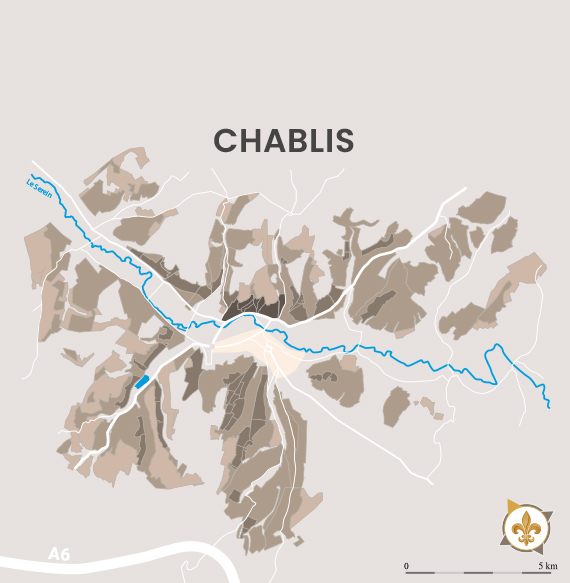
Chablis, located near Auxerre in the Yonne department, is one of Burgundy's most northerly vineyards. It is characterised by the fact that it produces only white wines from the Chardonnay grape variety, and by its geology, which is based mainly on Kimmeridgian soil. The appellation has 40 climats and lieux dits classified as premier cru.
- Soil and subsoil Middle and Upper Kimmeridgian.
- Alternating limestone and marl.
- Medium to steep slopes.
- South-west to south-facing.
- Altitude between 250 metres.
The grapes were brought to the winery and pressed delicately in a pneumatic press. The must was then cooled down and left to settle, in order to get rid of the roughest lees. The alcoholic fermentation was lead in temperature-controlled stainless steel vats at a temperature between 18° and 20°C (64°-68°F) in order to keep as much fruit as possible in the wine. The wine was then aged for 18 months on its lees, with frequent pumping over. Approximately 15% of the cuvée was matured in barrels of 1 to 2 wines for a discreet and elegant wood contribution. Malolactic fermentation was 100% complete.
The year 2024 in Burgundy was marked by extreme weather conditions, with excessive rainfall and a significant lack of sunshine. These factors led to heavy disease pressure, particularly downy mildew, complicating the work of the winegrowers. Frost and hail also caused significant damage, particularly in regions such as Chablis and Auxerrois.
Yields were severely affected, with drops of up to 70% in some areas. The Côte Chalonnaise held up better, with more limited losses. Overall, volumes are well below the usual average, a reminder of the difficult harvests in 2021.
The late harvest necessitated rigorous sorting to preserve quality. Despite the challenges, the grapes harvested reached good ripeness thanks to a sunny spell in September. The reds stand out for their richness and concentration, comparable to great vintages such as 2010. The elegant whites are reminiscent of 2022.
Initial tastings reveal promising wines, with concentrated aromas and a fine structure. Although limited in quantity, this vintage promises to be a qualitative success.
 PDF file