


Chardonnay.
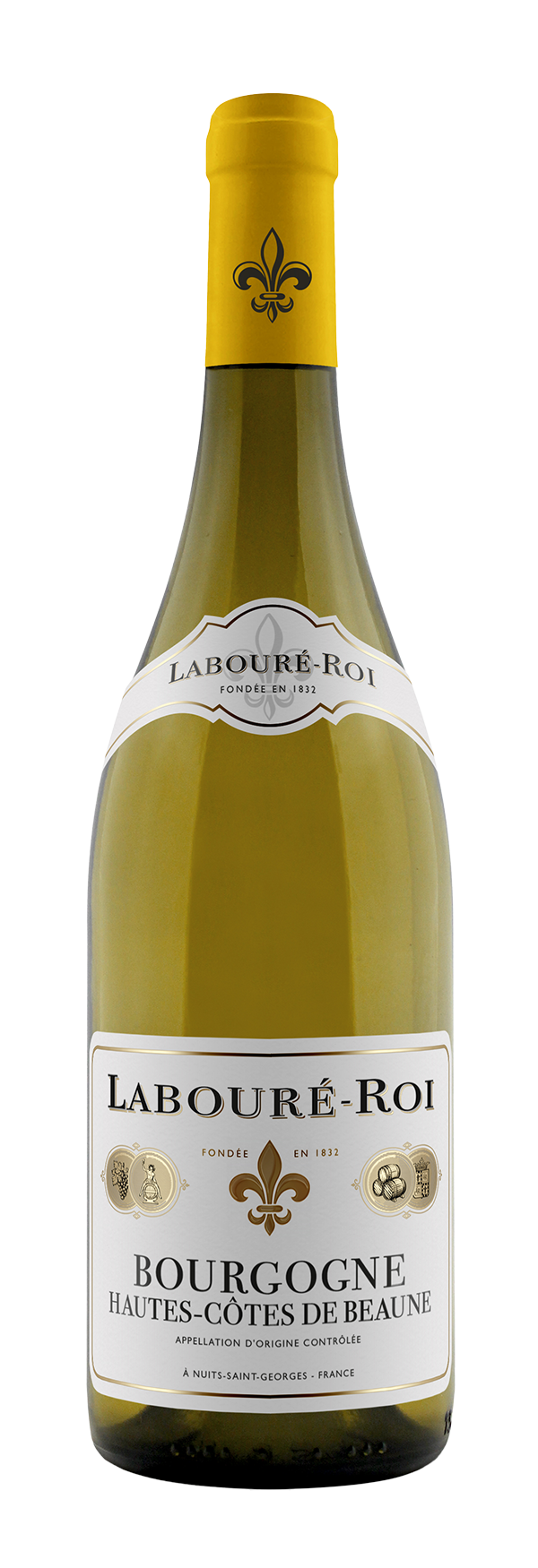
Colour: Elegant gold with green tints.
Nose: Fresh, pure perfumes of white fruits (pear, peach) and white flowers (linden).
Palate: A pleasant and lively wine with a floral attack on white fruits and almonds flavours with delicate woody notes.
It will be perfect with a nice plate of charcuterie, a savoury tart or cheese pie, a Niçoise salad, white meat or fish, tartare or marinated. Not to mention goat's cheese.
Serving temperature between 13 and 14°C. (55°-57F.).
Already pleasant to drink, it can be kept in the cellar for 3 to 5 years.
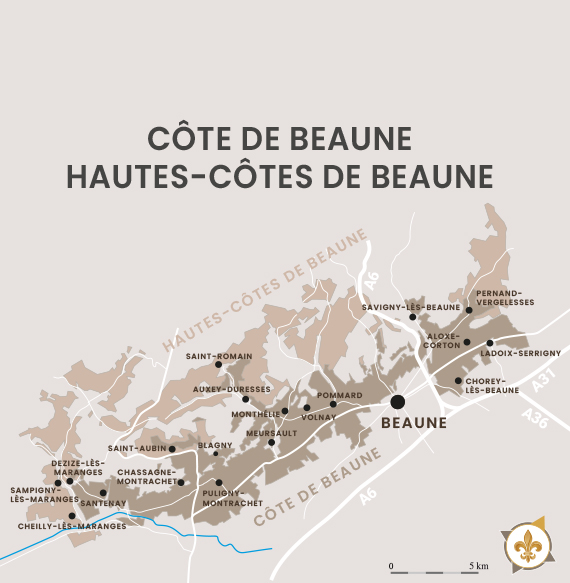
Located to the west and parallel to the Côte de Beaune, the Hautes-Côtes de Beaune are higher hills, interspersed with faults that give great variety to the crops and landscapes. The Hautes-Côtes are also unique in the original cultivation method used in the vineyards: tall, wide vines that are less sensitive to frost than low vines. The appellation covers 22 communes in Côte-d'Or and 7 communes in Saône-et-Loire. It covers an area of 835 hectares, with 669 hectares of red and rosé wines and 166 hectares of white wines.
Clay-limestone soils. Marly formations, slopes covered with limestone scree / South-east exposure / Steep slopes / Altitude between 280 and 450 metres.
Once the grapes had been sorted and destemmed, the must was extracted by pneumatic pressing, then cooled and left to settle for 24-48 hours. The juice was then brought down to 18°C to start the alcoholic fermentation (which lasted 3 weeks) in temperature-controlled stainless steel vats. Part (40%) of the cuvée was then placed in barrels (15% new) for 8 months' ageing before final blending. Light filtration before bottling.
The year 2024 in Burgundy was marked by extreme weather conditions, with excessive rainfall and a significant lack of sunshine. These factors led to heavy disease pressure, particularly downy mildew, complicating the work of the winegrowers. Frost and hail also caused significant damage, particularly in regions such as Chablis and Auxerrois.
Yields were severely affected, with drops of up to 70% in some areas. The Côte Chalonnaise held up better, with more limited losses. Overall, volumes are well below the usual average, a reminder of the difficult harvests in 2021.
The late harvest necessitated rigorous sorting to preserve quality. Despite the challenges, the grapes harvested reached good ripeness thanks to a sunny spell in September. The reds stand out for their richness and concentration, comparable to great vintages such as 2010. The elegant whites are reminiscent of 2022.
Initial tastings reveal promising wines, with concentrated aromas and a fine structure. Although limited in quantity, this vintage promises to be a qualitative success.
 PDF file