


Chardonnay.
Colour: pale gold with emerald highlights, clear and bright.
Bouquet: a clean nose offering citrus aromas with hints of vanilla and a touch of minerality, carried by a beautiful tension.
Palate: fresh and elegant, with citrus and vanilla flavours, supported by a beautiful acid balance that brings tonicity and a long finish.
This lovely Burgundy is the perfect accompaniment to a Comté cheese tart, chicken breast salad, fresh pasta, fish and chips or a seafood platter.
Serve at a temperature of around 12-14°C. (54-57°F.).
Enjoy now or within the next three years after the vintage.
The Burgundy appellation covers 384 communes in the departments of Yonne, Côte d'Or, Saône-et-Loire and Rhône. The terroirs are varied, with chalky or Kimmeridgian limestone hillsides in the north, marly limestone in the Côte d'Or and clay with occasional granite touches in Saône-et-Loire.
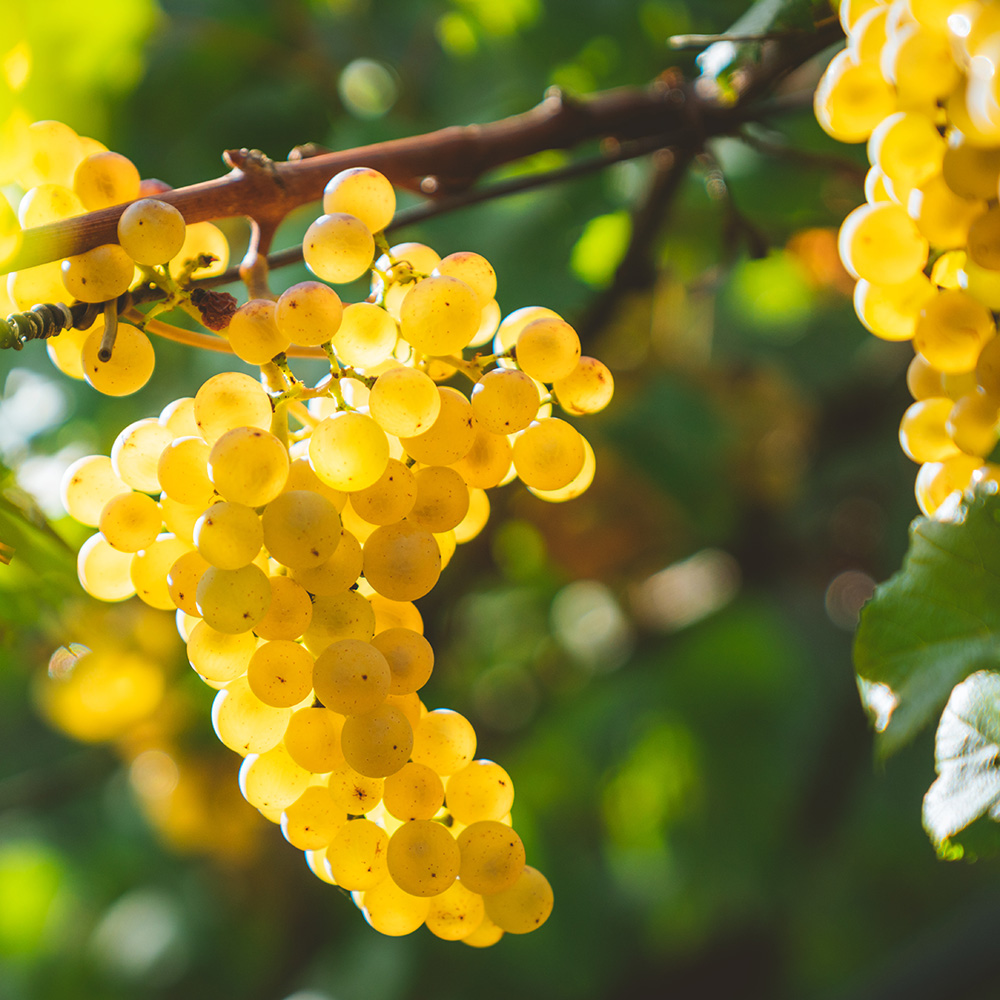
This Burgundy is a blend of Chardonnay from old vines (around 50 years old) of various origins. It combines the freshness, minerality and liveliness of northern wines, the fullness and roundness of Mâconnais and Côte Chalonnaise wines, and the power and complexity of Côte d'Or wines.
The grapes are harvested by hand. After pressing the grapes, a fining and cold settling of 48 hours at 8-10°C is applied. A racking is then occurred to separate the clear juice from the bad lies. The wine is then placed into thermo-regular stainless steel tanks for the alcoholic fermentation at low temperature (16° to 18°C. / 60-64°F.).
Maturing process takes place on barrels (20% of the total blend on oak: 50% new barrels) and on stainless steel tank (80% on goods finest lies).
The year 2024 in Burgundy was marked by extreme weather conditions, with excessive rainfall and a significant lack of sunshine. These factors led to heavy disease pressure, particularly downy mildew, complicating the work of the winegrowers. Frost and hail also caused significant damage, particularly in regions such as Chablis and Auxerrois.
Yields were severely affected, with drops of up to 70% in some areas. The Côte Chalonnaise held up better, with more limited losses. Overall, volumes are well below the usual average, a reminder of the difficult harvests in 2021.
The late harvest necessitated rigorous sorting to preserve quality. Despite the challenges, the grapes harvested reached good ripeness thanks to a sunny spell in September. The reds stand out for their richness and concentration, comparable to great vintages such as 2010. The elegant whites are reminiscent of 2022.
Initial tastings reveal promising wines, with concentrated aromas and a fine structure. Although limited in quantity, this vintage promises to be a qualitative success.

 PDF file