


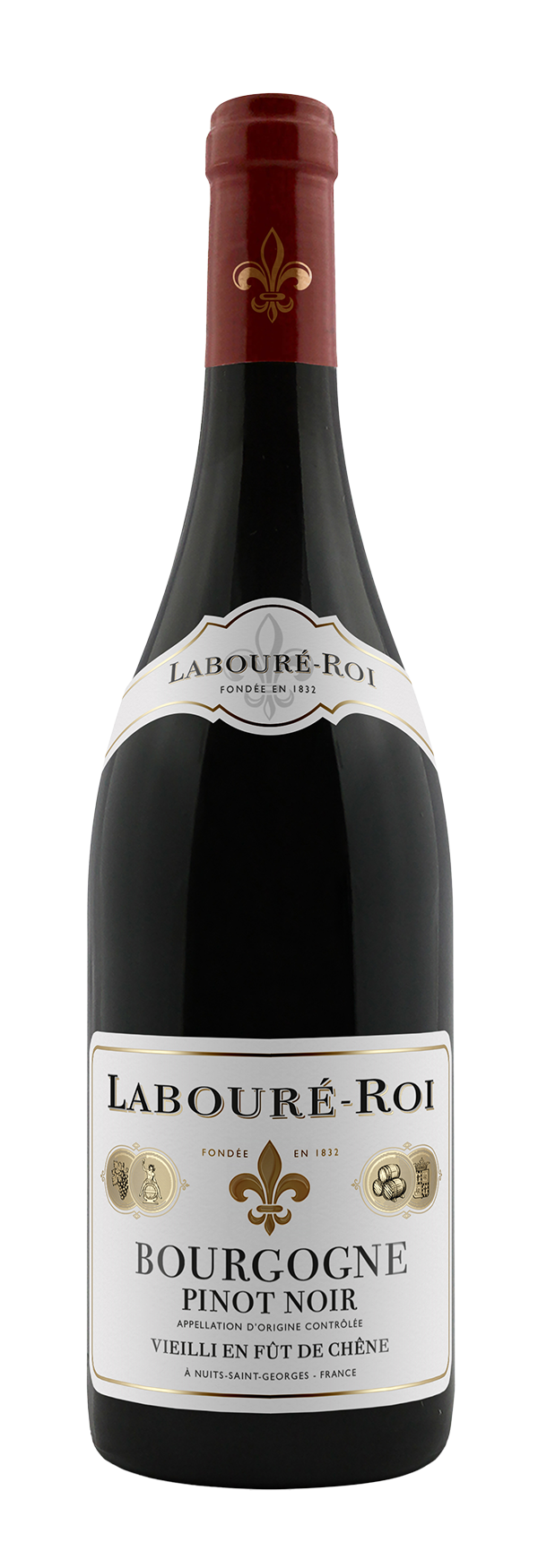
Pinot Noir.
Colour: Ruby red, clear and bright.
Bouquet: Delicate nose reminiscent of a basket of fresh berries (cherry, raspberry, strawberry, blackcurrant), enhanced by elegant, toasted, smoky and slightly peppery woody notes.
Palate: Full-bodied, balanced palate with silky tannins, rich fruit, and refined, integrated wood, delivering elegance, complexity, and a smooth, lasting finish.
Enjoy simply as an aperitif with a plate of charcuterie, bonito tataki, Italian pasta, a pastry, a pâté en croûte, coq au vin, beef bourguignon, beef with carrots or Camembert.
Serve at around 15°C. (59°F).
This wine can be consumed now or laid down in a cellar for the next 3 years.
The Burgundy appellation covers 384 communes, stretching from the Chablis and Auxerrois regions in the north to the Mâconnais region in the south, passing through the Côte d'Or and Côte Chalonnaise. Burgundy wines come from a wide variety of terroirs. Our Burgundy wines are made from a blend of grapes from the Côte Chalonnaise and Côte de Beaune, which bring fruitiness and roundness, with Auxerrois grapes for freshness. The terroirs of origin are varied, with the sometimes chalky or Kimmeridgian limestone hillsides of the north, the marly limestone of the Côte d'Or and the clay and marl, sometimes with hints of granite, in Saône-et-Loire.
The hand-picked and sorted grapes are destemmed, crushed, and then placed in concrete vats for a cold pre-fermentation maceration lasting 8 to 10 days at 8–10°C. Alcoholic fermentation follows, with daily punch-downs and pump-overs to extract colour and tannins. After racking, the free-run and press juices are blended in stainless steel tanks for natural clarification. The clear juice and fine lees are then transferred to barrels for ageing, with at least 6 months in oak for over 50% of the blend (100% oak barrels, with 25% new oak - both French and American).
The ideal weather conditions in Burgundy in 2023, characterised by a favourable spring, a hot summer with cool nights, moderate rainfall and an early autumn harvest, played a key role in the high yields and exceptional quality of the grapes at harvest time.
The white wines are distinguished by their elegance, complexity and liveliness. Subtle aromas of white fruit, citrus and floral notes add to their remarkable freshness.
The red wines are powerful and well-balanced, with aromas of red and black fruit, as well as spicy and mineral nuances. The silky tannins add an elegant structure, promising harmonious ageing.
In short, these are expressive, fruity wines with very fine aromatic profiles.
 PDF file